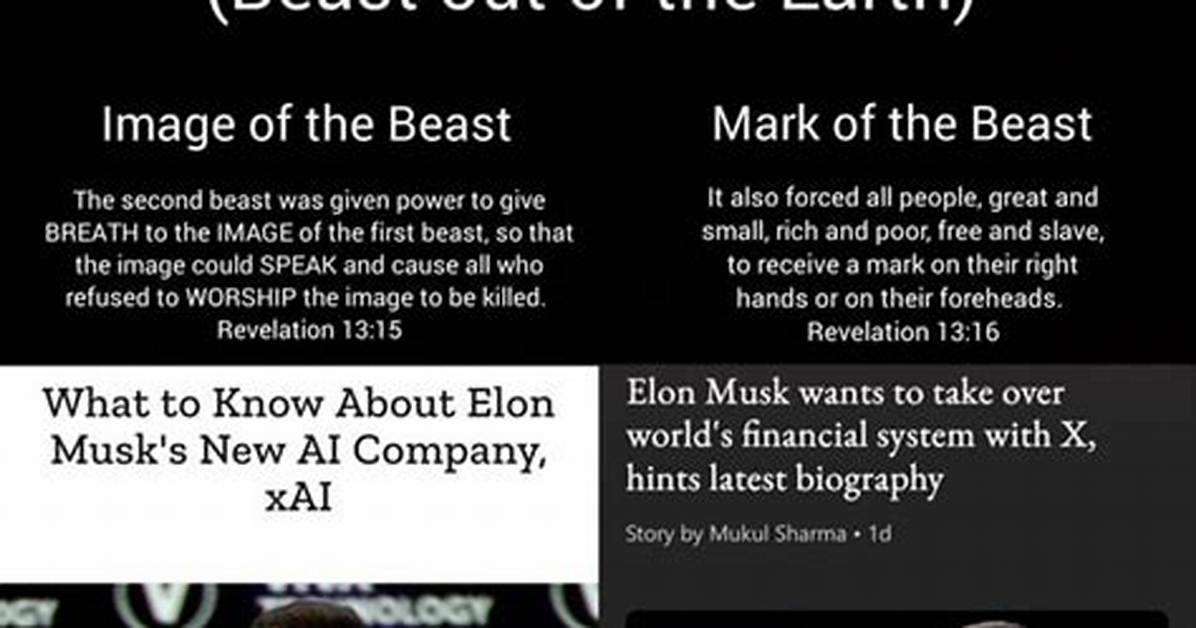
Elon Musk has become one of the most polarizing figures of our time, often praised for his groundbreaking innovations but also criticized for controversial statements and actions. As his influence continues to grow, the question arises: Is Elon Musk a false prophet? This article explores the arguments surrounding this debate, diving deep into his controversial moments, leadership style, and the impact of his words on global markets and society.
While many admire Elon Musk for his contributions to space exploration, renewable energy, and electric vehicles, others view him as a figure who exaggerates promises and creates unnecessary hype. This duality has sparked debates about whether Musk is a genuine visionary or a false prophet leading people astray. In this article, we will analyze both sides of the argument and provide evidence-based insights.
Our goal is to present a balanced perspective on Elon Musk's role in modern society, examining his achievements, failures, and the controversies that surround him. By the end of this article, readers will have a clearer understanding of why some people consider Elon Musk a false prophet and whether this label is justified.
Table of Contents:
Elon Musk: A Brief Biography
Elon Musk was born on June 28, 1971, in Pretoria, South Africa. From an early age, he demonstrated an extraordinary aptitude for technology and entrepreneurship. By the age of 12, he had already created and sold his first video game, Blastar. After moving to Canada and later the United States, Musk co-founded Zip2, a company that provided business directories and maps to newspapers. This venture laid the foundation for his future success.
Early Career and Entrepreneurial Spirit
Elon Musk's entrepreneurial journey took off with the sale of Zip2 to Compaq for $307 million in 1999. He then founded X.com, which later became PayPal, revolutionizing online payments. After eBay acquired PayPal for $1.5 billion in 2002, Musk invested heavily in space exploration and renewable energy, founding SpaceX and Tesla Motors.
Biographical Data:
| Full Name | Elon Reeve Musk |
|---|---|
| Date of Birth | June 28, 1971 |
| Place of Birth | Pretoria, South Africa |
| Net Worth (2023) | $270 billion (approx.) |
| Companies Founded | SpaceX, Tesla, Neuralink, The Boring Company |
Why Some Call Elon Musk a False Prophet
The term "false prophet" is often used to describe individuals who make bold claims or promises that fail to materialize. In Elon Musk's case, critics argue that his tendency to overpromise and underdeliver has earned him this label. For example, Musk has repeatedly announced ambitious timelines for projects like Mars colonization and fully autonomous vehicles, only to miss these deadlines.
Examples of Overpromising
- Mars Colonization: Musk has claimed that humans could land on Mars as early as 2024, but industry experts believe this timeline is unrealistic.
- Fully Autonomous Vehicles: Tesla has been promoting its "Full Self-Driving" feature for years, but the technology remains far from achieving true autonomy.
- Hyperloop: Despite Musk's initial enthusiasm for the Hyperloop project, progress has been slow, and the concept remains largely unproven.

