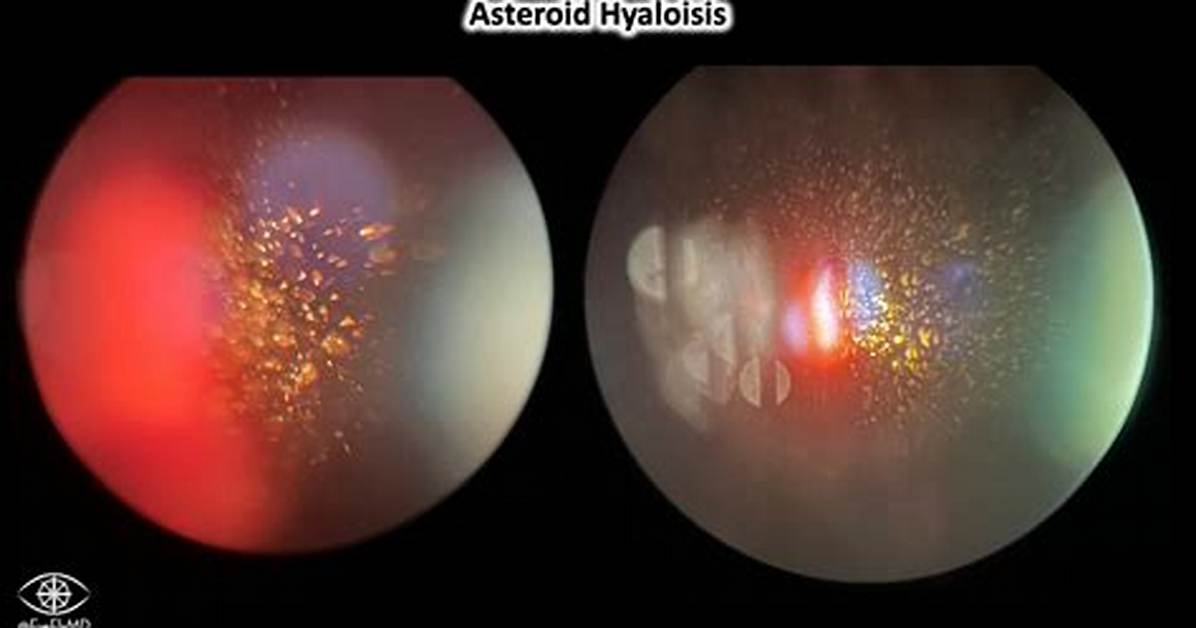
Asteroid hyalosis is a degenerative eye condition named for its resemblance to stars in the night sky. It causes small light-colored spots to appear in the eye’s vitreous humor, though it doesn't usually lead to vision problems. About 1% of patients in their 50s and older have asteroid hyalosis.
This guide will cover asteroid hyalosis symptoms, diagnosis, treatment options and why it's important to see your eye doctor for regular eye exams.
Asteroid hyalosis and the eye
Asteroid hyalosis causes white or yellowish-white deposits of calcium and fats in the vitreous humor of the eye. The vitreous humor is the gel-like part of the eye that sits behind the lens and in front of the retina. This watery substance makes up about 80% of the eyeball.
The vitreous humor has many functions in the eye, including:
Acting as a "shock absorber" for the eye
Giving the eyeball its shape
Permitting oxygen and nutrients to pass from the front of the eye to the back of the eye
Asteroid hyalosis usually occurs in one eye, but it can occur in both. Your eye doctor will be able to see whitish opaque particles floating in your eye or eyes during a routine eye exam.
Asteroid hyalosis symptoms
Asteroid hyalosis often causes no symptoms at all. A patient may not know they have the condition until their eye doctor spots it during ophthalmoscopy, a procedure during an eye exam that uses lenses and lights to look into the back of the eyes.
Rarely, a patient will go to the eye doctor because they have asteroid hyalosis symptoms such as:
There are many conditions other than asteroid hyalosis that can cause these symptoms. For example, eye floaters can be caused by retinal detachment, which can lead to vision loss and must be treated right away. It's important to see your eye doctor if you have any symptoms that affect your vision.

